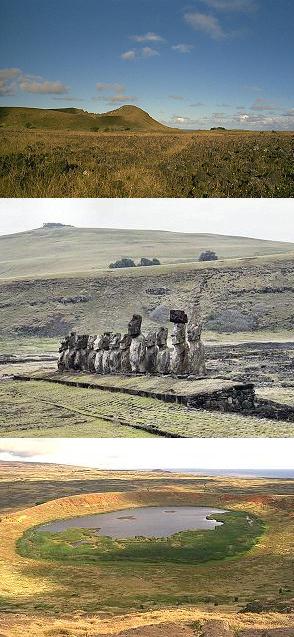
Experiment, Part 2
Hey folks. I've been kind of out of commission, but now I'm back, ready to pick up and see if anybody other than Noir actually read the Chesterton story. (Tangentially, in the meantime I read
Corelli's Mandolin, and it was great. Highly recommended, especially as a study in human and humane moral ambiguities. Nobody is precisely evil, though many do terrible things; no one is precisely good, though we are nonetheless compelled to sympathize with a few main characters. Obviously, this contrasts distinctly with the Chesterton piece.)
On to Chesterton. I really like
Thursday, both the straight adventure/detective story and because of the surreal twists at the end. Surely the chase scene must win some sort of award, too: foot to steed to car to fire engine, elephant, and hot air balloon... what more could one desire?
Oh, you desire questions, too, and attendant thoughts? It's your lucky day.
The Questions1. Is this a book about the superiority of order over anarchy? Or is it a book about the
unity of order and anarchy?
My first impression was the former; Zq's was the latter. Both seem plausible to me. To be sure, all of the heroes idealize order and are fighting against chaos in the world in this book; indeed it is just this struggle that is going on when the book opens and Gregory and Syme are facing off about the nature of poetry. If Syme is the hero and Gregory the villain, then perhaps we should say with Syme that "the rare, strange thing is to hit the mark; the gross, obvious thing is to miss it. We feel it is epical when man with one wild arrow strikes a distant bird. Is it not also epical when man with one wild engine strikes a distant station? Chaos is dull; because in chaos the train might indeed go anywhere, to Baker Street or to Bagdad. But man is a magician, and his whole magic is in this, that he does say Victoria, and lo! it is Victoria.... Every time a train comes in I feel that it has broken past batteries of besiegers, and that man has won a battle against chaos." This is Syme's battle, and Syme is Chesterton's hero.
But there is a compelling counterargument which points out that it is evil and chaos in the world that make order a possible choice for Syme. If Syme is a hero because he makes right choices, then surely there is some great value in the chaos that he tries to eschew (and, despite that fact, in which he constantly finds himself embroiled). Most importantly, the seeming chaos in Syme's world is not random; it is in fact a carefully controlled anarchy that leads Syme inexorably to his preordained place at the end of the book. If it is chaotic, it is also both predicted and ordered. Perhaps, then, we should say that, on a human scale at least, Chesterton is arguing for a kind of unity of the passions.
But to me,
Thursday just doesn't seem to be drawing the necessary sort of equivalence between anarchy and order. It seems instead to be an apologetics for evil in the world, and it asks us to equate evil with anarchism. Perhaps Chesterton is indeed saying that most evil is illusory, or that it is necessary that even good people surrounded by uniformly good people should feel themselves alone and embattled--but this is because they have right opinions about real evil (even if that real evil is, well, unrealized), not because there is no real evil. It does seem to me that we are meant to take a passion for true chaos to be the great evil in the world, and quite distinct from a love of order and right and goodness.
2. What does it mean that the book is subtitled "A Nightmare?"
Of course this suggests the dreamlike, surreal, and unbelievable ending to what began as a well-grounded and recognizable thriller. But it also seems to suggest that Syme's world is undesirable. This seems nonobvious to me. Can we tell from this book what would be more desirable? Perhaps a world in which there is no struggle between good and bad? Or a world in which nobody has a predisposition towards anarchy?
Or perhaps this book is nightmarish simply because nothing is as it seems. Everybody goes around in disguise; good people fight against other good people; the biggest bad guy is also the greatest moral force in the world. I don't know.
3. Do you think the book has any real implications for earthly governance?
Thursday is, of course, allegorical, but on its face it is also about anarchy and government in our world. Must Chesterton think--well, anything coherent at all--about governance here on this earth, in order to maintain a consistency with his allegory or his theology?
The obvious claim, I think, is that privileging predictability over revolt and order over anarchy would argue always against revolution. There some big differences, however, between trying to overthrow God and trying to overthrow one's government (not the least of which are 1. God is definitionally good, and 2. It is possible to successfully overthrow one's government). So much of the dialogue is political argument, though, that I wonder if there are any real political opinions being expressed.
4. What the hell is going on with the notes during the chase scene?
I mean this most sincerely. I just don't get it. Here I'm talking about the notes that Sunday leaves for Our Heroes the Days of the Week as they chase him around: "The word, I fancy, should be 'pink'" and "Your beauty has not left me indifferent.--From LITTLE SNOWDROP" and "What about Martin Tupper
now." Are these just random? It seems so unlikely. Beautifully, Chesterton's book is tightly ordered from the start (much as it claims all things ought to be, if you buy what I'm saying under question # 1). This is allegory, and from the beginning each secret agent somehow embodies the day of Creation that he represents. Having finished the book, if one goes back to the beginning and restarts it one finds right away that Chesterton is giving away the game to anybody who is paying attention. (The obvious fact that the police commissioner is the same fellow as Sunday only reconfirms this consistency from the start.) The story develops in unexpected ways, but it is anything but random. (In fact, this might itself be another remove of allegory: just as Syme's story is carefully crafted by Sunday, but seems chaotic, desperate, and uncertain to him,
The Man Who Was Thursday has been similarly organized and pored over, despite the fact that it seems to us to be moving swiftly and wildly towards the absurd.) As a result, I feel like there should be some satisfying interpretation of these notes that Sunday sends to the members of the Council. But what could it be?
5. Doesn't
Thursday imply that human suffering imparts moral force?
Chesterton seems to be answering the "Why is there suffering in the world?" question not by the (perpetually unsatisfying) appeal to free will, but rather by saying that the suffering of his heroes provides an answer to Gregory's otherwise-valid sense of moral superiority. This seems at first to be a much better answer than saying, "Well, we must have suffering in order to have free choice." By making his agents know loneliness, fear, faithlessness, and battle, Sunday negates Gregory's ability to take the moral high ground when he stands alone against a much greater power. No longer can Gregory portray his anarchism as a noble struggle against those who are perfect and who, consequently, have never have known any sort of suffering at all; we all know that it is precisely playing into the hands of Chesterton's God when Gregory expounds, "The unpardonable sin of the supreme power is that it is supreme.... You sit in your chairs of stone, and have never come down from them. You are the seven angels of heaven, and you have had no troubles. Oh, I could forgive you everything, you that rule all mankind, if I could feel for once that you had suffered for one hour a real agony such as I...." Of course the "seven angels" have come down from their thrones, have suffered real agony, and are therefore entirely unconvinced (as are we, the readers).
But what kind of world is it where suffering imparts moral force? We can see that Gregory's monologue is deliciously misguided, but taking a step back from the literary, I just don't see why it is
necessary to have good people suffer real agonies just to deflate his victories. Is it such a great good, after all, that the good folks should, by virtue of their own harships, be able to ignore the sufferings of the bad people? If Gregory's stance appeared noble, is it less so because of what another, unrelated person has experienced? And if it is actually ignoble, is that affected by what Bull or Syme or the Professor has been through? Surely not. Yet Chesterton does seem to require this reading. Gregory's anarchism is base because one can suffer nobly for a good cause just as well as for a bad one.
How odd. And how undesirable in a world.
Perhaps that's why the book is a nightmare?
An Experiment
I think it was Guy Noir who suggested a while back that we all read something together. Well, I'm going to propose now that we do this, with absolutely no idea whether or not it will take. We shall see, I guess.
Zq read a book: G.K. Chesterton's
The Man Who Was Thursday. He then gifted me this book, which I've read. In the meantime, V, Al, and Q (none of whom check this blog, so I guess they won't be participating in our little conversation) picked it up, because I was talking about it. Well, that seems promising. And the book does have many merits that make it particularly well-suited to an experiment of this sort, namely:
- It's short.
- It's out of copyright, so you can get it for free on the internet if you like that sort of thing.
- It's an easy read, kind of detective story-meets-adventure thriller-meets-philosophical and theological playground. You could imagine a joke: A detective, an anarchist, and God walk into a bar...
- There are parts of the thing that I just don't understand, even though I really like it. It would be cool if somebody else could jump in and offer ideas (serious or wacky--whatever).
I have the beginnings of a robust reading of this book--some already put into well-formed email discussion, even--but I'll spare you for the time being and just let you read it yourself. I'll post again on this sometime next week, okay y'all? Maybe you'll join me?
***
Now for the other side of this post, which has to do with the relative virtues of the Book Club. I've never been a member of such a thing. On the one hand, I can see that sharing literature--or, for that matter, nonfictional texts--tends to make it richer, because it allows you to add other peoples' insights and enthusiasms to your own. But the flip side of this is the inability to sustain a lengthy train of thought when conversing amicably. Friendly discussion is not the place for extended monologues; devising strong readings of rich texts may well be best done by exploring an idea rigorously, however.
I think people might jump on me for antisocial tendencies if I suggest that I might rather work through literature alone than with the help of others. To forfend that possibility, I'm going to use an analogy. Let's say you've got a calculus problem in front of you, along with the solution. You have some desire to understand that problem. Well, it makes sense for you to sit down with it and to go through the solution step by step, making sure you really wrap your head around each of the elements that are going into it. It also makes sense for you to sit down with a tutor or an advisor or a friend who understands these things and whose goal is to help you understand them, too. But, I propose to you, you're not going to get nearly as much out of a group of people in a similar situation as yourself, who are all trying to understand the problem for themselves, and who are proposing various ways to solve it and starting here and there and talking about this and that possibility without really knowing what is going on. After an hour of this, you might have some ideas as to what the significance of the problem is and why the solution works. But an hour following the solution step-by-step surely would have gotten you much farther.
A book is interesting; it is analogous both to the problem and the solution. Novels contain within themselves their own answers. (I suppose the "question" of a text is not much more or less than, "What does this mean, is it interesting, and is it beautiful?") I find it immensely satisfying to sit down with a book or poem and to try to work through its richness, to come up with some strong reading of the thing. This is helped by the teacher or friend who says, "Here is what I think this book is about and the way I think these elements come together; why don't you build on that?" It isn't helped as much, at least, by the peers who are as muddle-headed as I am. It's not that I dislike spoken exchange, but that it moves too fast for me; I haven't yet explored notion # 1 to my own satisfaction before notions # 2-12 have been put on the table, tweaked, and summarily dismissed.
There's something satisfying about the written exchange, though. After all, one does get quite a lot out of sharing ideas; it's good to have others to help clear up one's muddle-headedness, if only they can do so at a pace which isn't cloying (and this is what a teacher in an ideal world does). Writing controls the flow, and lets one go at one's own speed, following this or that notion as far as one likes before accepting it--or giving up on it.
This blog thing might just be the perfect medium for group discussion of that sort. Maybe Noir is on to something.
Zeroes and the Infinite
I recently read a book about the history of 0 (that is, the number, zero) and its place in the development of mathematics. The author talks about ancient Greek math towards the beginning of the work, and he suggests that the reason the Greeks had no zero was that they were fundamentally geometers who thought about numbers primarily as measures and mathematics primarily as a study of relative proportions. Ratios don't make much sense when you start to stick zeroes in there; the length of my big toe might be 3/2 as long as your big toe, but it's nonsense to say that anybody's toes could be 4/0 the size of somebody else's (and surely there's no need to compare two things if I've only got one of them, which is essentially what one is doing when one says that the ratio of apples to oranges is 0 to 52--I mean, there just aren't any apples to be dealt with in the first place).
The most interesting part of this account is not the math and it's not the history, either (both of which are really quite rudimentary here). Rather, it's the passing mention of the fact that the Greek word for "ratio" is logos. This struck me; I've always taken logos to mean something like "word" or "discourse" or even "reason"--all with very verbal connotations. The reason I was so taken with logos as a mathematical term is because I know it primarily through John 1:1.
en arch hn o logoV, kai o logoV hn proV ton qeon, kai qeoV hn o logoV.
In the beginning was the Word, and the Word was with God, and the Word was God.
See? Even in its more philosophical uses, logos has clear cultural, Biblical connotations as a word to do with words. This it is; it is much more, as well.
Q offers a good historical account of where the above (KJV) translation came from--namely, the Latin Vulgate, which we presume to have used verbum in the place of logos. That sounds plausible to me, and is the sort of thing that Q would know.
But come on! Why on earth, given all the salient possibilities to do with rationality (in both the logical and the mathematical senses), would you think that the best translation of this little bit of the Gospel--the translation most likely to highlight God's inherent reason, order, and place in nature--is the one where we use the word "word" (or, for that matter, the relatively boring Latin "verbum")? Doesn't it make more sense if you say, "In the beginning was reason and mathematical truth, and these things were with God, and they were God?" That seems far more compelling to me.
Or does this just highlight that I don't really understand the compulsions of religion?
L'homme est né libre, et partout il est dans les fers. Peut-être ils sont les chaînes d'une ignorance inculte et stupide, heeuuu?
L'homme est nϙ libre, et partout is est dans les fers.
I've been reading Rousseau lately--not
The Social Contract, which it seems that everybody reads at sometime or another, but
Emile, which I first encountered when I was a freshman in high school. I didn't read it then, but I recently encountered an unglamorous Everyman's Library copy of that text in my grandfather's library, and I remembered the old intention to read it. My grandfather generously gifted the book to me.
Let me say two things upfront, for those of you who may not be familiar with either the book or its author. First,
Emile is primarily a discourse on education, a hypothetical educational project in which Rousseau explains the best way to teach a child so that he grows into a self-aware, happy man. Second, Rousseau himself is a right bastard: sexist, racist, and full of himself to boot. This is not obvious from
The Social Contract (or at least, I don't remember it much in that work), but it is clear as a bell in
Emile This does not make any of his educational ideas self-evidently false.
But there is something else that I dislike about Rousseau's
weltenschuang (if one can appropriately mix the French and the German here)--something that I dare say is a bit more intellectual and a bit more to the substance of Rousseau's educational claims. Fundamentally, I really just don't like philosophies (and theologies) which privilege innocence, the "state of nature," and stupidity (not that their proponents would use that word, of course). Rousseau is the creator of the "Noble Savage." He is perhaps best known, in this day and age, for his declaration, "Man is born free, yet is everywhere in chains." His educational program consists, primarily, of shielding the child from the "corrupting influence" of other people and the things that they have created in this world; he suggests that we should not force a child to learn, but rather that, by secretly controlling everything from his friendships to the activities which he witnesses, we will create a world in which the child decides he is interested in "the right" things, and then chooses to learn about them on his own.
But I don't buy it. Of course it is desirable for a child--or an adult, for that matter--to be interested in the world and eager to learn things about it. But Rousseau's Noble Savage idea is a direct descendent of the Church's weird privileging of innocence and ignorance (consider the ideal state in the Garden of Eden: very, very like the state of Rousseau's ideal modern man). The problem with both of these conceptions is the idea that
growing up, becoming a mature, well-educated, industrious, sexually desirable and desirous
adult, is taken to be a bad thing. For both Rousseau and the church against which he so often thinks he is arguing, experience distances one from the ideal (whether we style that ideal as "savage freedom" or "Godly innocence not yet sullied by our inevitable human failings"). For Rousseau, education consists in giving a boy enough self-knowledge that his natural virtues overpower the corrupting and unhappy ways of the other people that he will meet when he is an adult.
Rousseau takes this to be a claim about freedom and happiness. His educational program is geared towards letting a child choose his own interests from the beginning, and stumbling and having to work through his own (albeit child-sized) hardships (even suggesting that it is better that a child be allowed to make his own mistakes and die in the process than to have him grow into an adult who did not have the same liberty-filled education). A self-directed life like this is, for Rousseau, the only truly happy life. So, while at the beginning we only give the child the perpetual
illusion of choice while simultaneously carefully controlling all the aspects of the world he sees, later on the man benefits from always doing that which he is naturally predisposed to do, and by acting in harmony with his desires instead of getting sucked into doing what other people think is important.
In a world where there is prestige in the acquisition of things we neither particularly want or need, in which we let magazines tell us we are too fat or too ugly or too sexually incapable, in which people with all the luxuries they could want are chronically depressed and engage in all sorts of self-harm, what Rousseau says is somewhat compelling. He might be right that people are unhappy and unfulfilled in life if we do not have full moral control over our selves; he might be right that psychological pressure is the source of many of our gravest ills; he might be right that we ought to reconsider what we mean when we say that we are "free."
But Rousseau is naive to think we can escape society in the way that he suggests. He wants to educate Emile to be an individual among men - but he runs into deep and untenable difficulties when he considers love and marriage, for example. (He decides, ultimately, that the only way for Emile to continue to act as an individual is to have his wife act always according to his will, as an extension of himself: "The whole education [of women] ought to be relative to men. To please them, to be useful to them, to make themselves loved and honored by them, to educate them when young, to care for them when grown, to counsel them, to console them and to make life agreeable and sweet to them--these are the duties of women at all times." Note that this is not just an unconsidered sexism; Rousseau has written himself into a wall, strongly privileging the family unit but also placing as his first goal the absolute autonomy of his student, and that man's ability to always act freely on his desires. If Emile must always be able to make free choices, and if he is also to be able to live a life with somebody else, then it follows that she's going to have to always go along with his choices.) Rousseau finds himself in a tight spot when he dismisses everything but practical education, too, suggesting that for their own benefit all children should learn a manual trade so that they can work and be their own bosses--but this at the same time deprives society of everything from firefighters to doormen. And Rousseau doesn't even consider the possibility of the occasional failure of socialization under his progam; his entire scheme rests on the assumption that a child will on his own choose to have principles which are broadly compatible with the principles and values of the society which he will grow up to join. But what if he never wants to study basic math? What if he takes pleasure in hurting animals? What if he just learns to kill his own food--a perfectly morally defensible position, yes, but perhaps not if he later lives in an American suburb and takes this to mean that he should strangle the pigeons and shoot the dogs.
And this is precisely the problem. Rousseau pretends he wants his child to learn about himself and to discover his own desires, but in fact he wants the child to discover on his own the desires of the society away from which he is being diligently kept by his loving parents. In the meantime, he may well be discovering a great many natural principles on his own, but he is also being deprived of much of what we know, and of the kind of rigor with which we come to know things well. It may not be pleasant to memorize verb conjugations or to study the laws of physical motion (though it might be), but it is effective--and it is by doing the hard intellectual work of learning (at whatever level) that we come to know something well. Experts are made, not born.
Moreover, knowledge is progressive. The idea that a child should start from scratch when we already know so much seems to me at best ignorant and at worst immoral. The reason we teach what we know is that we already
know it. A man might feel a sense of accomplishment when he invents the wheel, but surely that's nothing more than an illusion if in fact the wheel has already been around for millenia. Better to teach the man about kinetics and let him undertake a real accomplishment, let him invent a real new thing.
And better to grant that the relationships we make, the things we learn, the education we foster, is a good thing representative of very real and very desirable growth and maturity--rather than a continuous progression away from the ideal of self-centered desire fulfillment. For if it is instead the latter of these two options, then surely the prescription must be to stop our social interaction, our education, and, in the final estimation, our life as a respectable, caring, productive human being. In the final estimation, this is a philosophy neither of hope nor of happiness.
And besides all that, the whole darned program is entirely impractical and impossible to implement anyhow. I find that reassuring, I confess.
You are what you eat?
Flipping through
The Omnivore's Dilemma, by Michael Pollan, is an enlightening exercise in understanding one's food. Who would have thought that the calories we Americans eat are to an unprecedented extent derived from corn? Who considers the lack of a "food culture" in America to be an important factor in everything from dieting fads to obesity? Who, other than Pollan, is crazy enough to produce a meal by hunting and gathering, in this day and age?
Some of these insights about food are really quite shocking. In just one example, we learn that the energy in a chicken McNugget comes almost exclusively from corn--from the nearly-exclusively corn-fed chicken to the modified cornstarch that binds the meat together, from the soy lecithin for flavoring (the name is deceptive--it can be, and usually is, derived from corn) to the corn flour breading on the outside, and even to the corn oil that the thing is cooked in. In some very real sense, a meal of chicken McNuggets is processed corn held together by processed corn, breaded by processed corn, fried in processed corn. And don't even get me started on the sauces for this scrumptious meal. (They're full of high-fructose corn syrup, corn starch, xanthan gum, dextrose, and even caramel color, all of which are corn-derived.) It's an historical anomoly to eat like this: in other times and places, chicken feed off of wheat and grubs (which in turn feed off of myriad kinds of vegetable matter), corn and grass and millet and barley. Flour for breading might be wheat-based; flavoring would be herbal and therefore derived from a selection of varied and aromatic plants. Oil could come from corn, or soy, or olives, or sunflower seeds, or indeed from any number of available trees and plants. Sweetness (in a dipping sauce, for example) came from cane sugar, palm sugar, honey (flower-derived), or molasses (from sugar cane, the sugar beet, or sorghum). Corn-derived preservatives and colorings are a new culinary invention.
This is not to say, precisely, that there's a problem in depending on only one plant to convert solar energy into the bulk of our food, nutritious and not-so-nutritious--but it is to point out how strange this moment is in the history of human gastronomy. We Americans eat more single-mindedly than anybody else, ever. This represents a monocultured victory over environment: corn is a versatile, hardy, nutritious foodstuff. It's not crazy that we should depend on it more even than the Inuit depend on fish (which, incidentally, eat any number of varied aquatic vegetables anyway). Pollan does a superb job of showing how strangely we eat, however, and I find this rumination compelling.
But what's more interesting--and, sadly, less emphasized in Pollan's book--is the author's take not on food, but on people. He hypothesizes that the uniquely American dilemma of obesity stems from a uniquely American lack of a food culture. The French know how to eat healthily, Pollan suggests, because they have a long tradition of eating and eating well that has been passed down over hundreds or even thousands of years--and this tradition informs their food choices still today. Americans fall for ridiculous dieting schemes (no butter! no carbs! lots of protein! minimal protein!) because we don't have a strong cultural grounding in reasonable eating habits. The argument is a bit questionable, of course, if only because increasingly we are seeing that the "uniquely American" obesity problem is finding its way into numerous other countries with much more entrenched eating habits. Still, it's an interesting thought (and that always attracts me, what can I say). Moreover, it does seem intuitively true that a culture with no sense of "summer vegetables," a decreasing awareness of the starch-meat-vegetable mealtime trio, the need for a government-sponsored food pyramid, and no national cooking style, should be far less sure about what its people ought to be eating than another, more gastronomically aware culture.
The most interesting idea Pollan's whole book, though, is not even this speculation on the healthful influence of national pride through foodstuffs. It is instead an idea that Pollan tosses around in the introduction and then quickly dismisses as inessential to the main investigation of his text. That's a shame. Where our food comes from, and how it gets to our table, does make for interesting reading. But the idea that our biological ability to eat nearly any organic thing has made us smarter and more social--well, that makes for interesting thinking. And it's an idea that Pollan never follows up on, and one whose case he doesn't compellingly make.
I wish he did. For the Omnivore's Dilemma, succinctly put, is the question of what to eat. It's a question that doesn't plague many animals: "The koala bear doesn't worry about what to eat," Pollan rightly tells us. "If it looks and smells and tastes like a eucalyptus leaf, it must be dinner. The koala's culinary preferences are hardwired in its genes." But for omnivores like ourselves--and rats, for that matter--the question of what to have for supper is much harder to answer. The abundance of choice creates a stress where other species have none. At the same time, though, omnivory allows us great versatility: people (and rats) can live almost anywhere on earth (which stands in stark contrast to the Australia-bound koala). Our ability to eat almost anything shapes us in many more ways than simply determining the kinds of nutrients we ingest.
By far the most provocative claim that Pollan makes along these lines--the claim he doesn't follow up on, and the claim that I wish was the basis for this book--is that omnivory implies mental acuity. After all, Pollan says, unlike other animals, we have to have complex memory and pattern recognition skills just to eat. The fact that our food preferences aren't genetically hardwired means that we have to consider food anew each time we are hungry. What do I feel like eating today? Are those the same berries that made me sick last week, or are they more like the sweet berries I picked for supper a week ago? Is it better to roast my fish or eat it raw, like sushi?
There's a social and educational angle to this, too: maybe I've never encounetered these berries before, but my parents tell me not to eat them because they're poisonous. I was taught to cook my food, to grind my grain to make flour, to shop at Wegman's and to put the leftover chicken in the freezer. Baby humans starve when left alone; grown men have learned to feed themselves. For people, eating implies memory, learning, conscious consideration, and possibly even rationality.
This leads Pollan ultimately to suggest that "the reason we evolved such big and intricate brains was precisely to help us deal with the omnivore's dilemma" (though he foists responsibility for the claim onto "many [unnamed] anthropologists"). In other words, people are smart--at least in part--because it's impossible to survive as a dumb omnivore. If we were stupid, we'd starve.
Pollard's book is more about food than it is about people (grand designs to the contrary notwithstanding). But it seems to me that the smartness claim might be interesting and easy to test--and not by anthropological theory, but rather by hard scientific experiment. If we looked at the brains of people and of rats and discovered that they both had disproportionately large frontal lobes, for example--while intermediate, non-omnivorous species did not--that would provide some compelling evidence for a specific, definable link between what we eat and how our brains are wired. And
that would make for a great book.
I used to think "pithy" meant "light" or even "trite." oops.
Hi folks. Of late, I've been reading Francis Bacon's
Of Empire, a collection of his essays. He's got a few pithy lines in there among his instructions as to how to build the ideal garden (30 acres, open galleries, fruit trees, an artificial heath) and how to travel the world (with a tutor, keeping a diary, and without putting down roots in any one place). My three favorite quotes are below. (Let me add, however, that this man is no Shakespeare--offbeat speculations aside.)
Pithy quote # 1: "There is no question but a just fear of an imminent danger, though there be no blow given, is a lawful cause of war."I used to think of this as the Bush Doctrine. Turns out, unsurprisingly, that it's been around much longer than Mr. Bush, and, again unsurprisingly, that it has been more explicitly and concisely stated than ever the President has done. What's interesting about Bacon, though, is the reasoning that informs the sentiment. Bacon's concern is with relative power: in a finite world, your gain in territory or trade comes only at my loss. Every time you become stronger, I become relatively weaker, and this is all that matters. Perhaps what Bacon says is obviously true in the case of territory, but it is nonobvious in the case of trade; we think of free trade and manufacturing for comparative advantage as helping all involved, but Bacon would argue that the disproportionality of benefits is deeply problematic. A neighboring state's growing power is a threat, even if that state is peaceful, and even if it comes with your own, relatively slower, growth in power. (This is, of course, an oversimplification; if my state is growing in power relative to 10 states, but to do so must lose power relative to an 11th state, we would be well-advised to accept the deal for the time being. Our world is not a two-state system, after all.)
The other interesting thing about Bacon is his presumption that all leaders and rulers will, and should, follow this precept. His understanding of war (and indeed of international negotiation) is vastly different than ours. It is one that allows for a noble enemy, one which doesn't necessarily cast armed conflict in terms of right vs. wrong, but rather in terms of two rulers each struggling to protect their nations against the encroachment of the other. For Bacon, it is morally equivalent to say, "I attacked because I felt imminent danger" and "I was attacked because I presented imminent danger." (It is not practically equivalent, just morally. What I mean is, Bacon doesn't feel the need to pick sides, or to discover which cause was the more just.) Indeed, for Bacon, a bad leader would be one who does
not fight to protect his people, or even just to make them great.
If his take is very equitable, it is also very mechanistic. (Perhaps we should expect this of a sometime-dabbler in Enlightenment sciences.) While he has a sense fo the noble cause, Bacon also has a strong sense of human nature; it is his contention that fighting to preserve one's nation, for example, is noble--but also that it is unavoidable. When we look at Henry the Eighth of England, Francis the First of France, and Charles V of the Holy Roman Empire, Bacon would have us see that they formed alliances and waged war in very similar ways and for very similar reasons. One reason not to proclaim the moral high ground in armed conflict, then, is the possibility of one's enemies' nobility; another reason is the certainty of our inherent similarity.
Pithy quote # 2: "All precepts concerning kinds are in effect comprehended in those two remembrances: Momento quod es homo
, and Momento quod es Deus
or vice Dei
: the one bridleth their power, and the other their will."First, a quick translation: "remember you are human" (or, "remember you are a man"), and, "remember you are God, or God's regent on earth" (or "a God," "one of God's viceregents," etc. with various articles flowing in and out as the translator sees fit).
I like this. You're in charge--you get the power, you the responsibility, you get to boss people around and create worlds and all that. On the other hand, you're just a person, nothing special, what makes you think you deserve all this anyhow?
I'm not really in favor of divine monarchy or the whole leader-as-God's-regent kind of thing, I have to say. Give me a democracy any day. But if you have to explain the trappings of monarchy, this is not a bad beginning.
Pithy quote # 3: "It is good also not to try experiments in states, except the necessity be urgent or the utility evident; and well to beware that it be the reformation that draweth on the change, and not the desire of change that pretendeth the reformation."Well said, Sir Francis. Spoken like a true conservative indeed.
I mean, I take the point that reformation and revolution do not break out of nowhere, and so must generally have some more immediate cause than the continuing
status quo. The problem here is not the observation, but the prescription that comes with it, the "...it is good not to experiment, because that might cause--gasp!--reformation!" I mean, there is a difference between reform and out-and-out revolution, no? And there are real goods to come of change, too. I mean, Bacon is basically saying, "It's no good to change things, because changing things might cause a clamor for further reform, and reform is a kind of change, and obviously we presume that it is no good to change things." Come now. Surely this is circular. Bacon's whole prescription relies on the idea that his readers are already predisposed against any sort of governmental reform.
This, I note, was probably a good assumption. I mean, if you are at the top of an arcane pecking order, you'd rather stay there, too, wouldn't you? Suddenly you'd go all-in for the perpetual stability of the current regime, right?
Well. Or something. So there you go. A three-bulletpoint summary of Francis Bacon on statehood and empire.
Of Blogging
There is only one poem about poetry that is any good.
If that.
I waffle; today I find that it is pointed and well-wrought; today again I find that it is empty or hollow.
Here I am thinking of Archibald MacLeish's
Ars Poetica. It starts with an apparent contradiction, saying that poetry should be "mute," "dumb, "silent," and, finally, "wordless." Taken on their own, of course, these sentiments would be baffling--but from the start we are also given the better alternative to loud and wordy poetry (even if it takes a while to understand that fact). For MacLeish, a poem's power is in its palpability, its ability to show, not tell. Indeed, he says straight out, first line, "A poem should be palpable..." but it's only in the final section of the poem that his meaning comes clear: no poet should write the "history of grief," but should rather
show grief with "an empty door and a maple leaf." No poem should say "I love you," but should instead speak of "the leaning grasses and two lights above the sea."
And this is precisely the problem with
Ars Poetica and all other poems about poetry.
Ars Poetica is indeed a pretty good poem (especially its semantically-complicated second section, actually, which I haven't even touched on here)--but MacLeish, like every other poet on poetry that I've read, is unable to take his own advice when writing about poetry itself. If poetry should make its point palpably, should show and not tell, then his explicit exhortations are of an inferior sort. To be sure, they're far better than the incredible self-indulgence of
Wislawa Szymborska or the ridiculousness of Naoshi Koriyama's
A Loaf of Poetry. (Note to Koriyama and numerous others: metaphors do not a compelling allegory make. It is not enough to write, with Billy Collins, about the horrors of
"torturing a confession out of" a poem; there is no torture, and no confession, and we all know that what is stake here is the meaning of the work. By happy contrast, when Shelley reflects on the brevity of human life and dominant civilization, we are meant to believe that there is an
actual Ozymandias, that there are statuary remnants in the desert, and that the moral is the metaphor and the palpable image the reality--and not vice versa.) Somehow, even very great poets seem to lose themselves once they take on the subject of poetry itself, and their literary efforts inevitably fall short. It is not cleverly self-referential to write about verse in verse if the verse is no good in the first place.
This leads me to today's rumination. Do I blog more when more interesting things are happening to me, because I have more to say? Or less, because I have less time for this virtual world when fully engaged in the real world?
I suspect that I fall into a third category altogether. I write a post, generally speaking, when I feel like I have an interesting idea or observation--but surprisingly, this does not appear to me to be particularly correlated with doing interesting things in life. Of late I've noticed, in fact, that the more often I go out, the more often I drink Belgian beer on Friday nights and go on urban treasure hunts on Saturdays, the LESS often I seem to engage with interesting ideas (which you'd think would be more forthcoming as I do more varied and interesting things). Is this a comment on my friends? Our conversations? The (less analytical?) way I'm coming to look at and live in the world? Maybe just the way in which I am more settled in my reasonably boring job? Or what?
I feel like I'm losing my sharpness, and my blog seems to me to be a chronicle of this. When I fail to post, it is not because I'm doing something else (which I think is the stereotype), but because I feel at a loss for anything to
say.
End of self-indulgence. Back to normalcy now.
birds 'n planes 'n moral indecision
What a splendid weekend! Friday featured a high-scoring and victorious softball game. Saturday, I awoke early early and went with Bean and Ned to hike a bit of the Appalachian Trail. (Railroads, incidentally, are spectacular inventions. We took the Metro North up to the trailhead; the stop was literally a platform about 6 feet by 3 feet in size. Imagine how comical, then, this enormous commuter train looked pulling up at the stop and opening the door--one, single door--to let some 5 or 6 hikers out to make their way into the wooded, flooded wilderness.) It felt good to walk, though I was surprisingly slogged by the end of it all.
Sunday I had brunch with friends out near Columbia, and then N and I tromped off to see Superman Returns. Now I'm sitting on my balcony (with my computer, thanks to the magic which is wireless networking), enjoying a cool breeze and a laid-back New York evening before the Fourth of July holiday. Tomorrow I plan on going to a ballgame and seeing some fireworks. Hot dogs may also feature prominently.
This is the good life.
But this post was meant actually to be about Superman. N and I considered that Superman is a problematic hero. He himself is morally uncomplicated: Superman is a defender of right, good, and justice. Where Spiderman struggles internally with his powers and considers using them for revenge and personal gain, Superman remains always unequivocally good. We are meant to see his actions as invariably heroic. When Superman goes wrong, it is with the best of intentions and the purest of hearts. When he has to choose between Lois Lane and Gotham City, he always casts a wistful look in her direction and then saves the rest of the world instead. (And then, because he's Superman, he goes and saves her too.) The Superman of the movies, at least, is always a a sympathetic character. He has no internal struggles.
Superman Returns flirts with, but never fully draws out, the problems inherent in this heroic conception. There's something more than a bit distasteful about Superman as lovestruck temptation to marital infidelity, after all, and putting Lois Lane into a serious relationship is therefore an inspired move. It's not a move the film is prepared actually to make with any spine, however. What we see instead is a watered-down version that allows Superman a relatively easy way out of any moral or emotional conundrum: we are talking here only of near-marital fidelity, though the movie would have been better for an honest-to-goodness marriage that we couldn't wrong-headedly rationalize away as immoral or unimportant (relative to Superman's own great love, of course). Adding a child to the mix is similarly inspired, because it makes the right course of action so painfully clear and so painfully contrary to Superman's desires (and actions--he's never quite blatantly inappropriate, but confessing one's love to somebody in a committed relationship, with a kid, knowing she loves you back, is inadvisable and even manipulative). Making that child (so very predictably) Superman's son completely undoes the interesting twist that his presence proides, however. Instead of feeling more uncomfortable with the way that Superman is disrupting Lois's life and the life of her partner (because there's a child involved), we now feel
less uncomfortable (because it's Superman's child, and so he suddenly has a much greater right to continued involvement with this formerly happy family). The moviemakers nearly manage bring in the tension of a competing love interest without the attendant moral quandary that the situation so obviously prompts.
But the Superman stories oughtn't so easily escape that quandary. (It's a different question whether Superman himself would be a better character if he was ever confronted by moral misgivings, or whether it's enough for the audience to sometimes recognize an irony or inconsistency in his savior-like charicature (played up particularly in this latest film) and his human-like actions and reactions.) When one is cast as the embodiment of good in a black-and-white, good-vs.-evil kind of world, surely the moral considerations follow.
Can you have a Superman who isn't always right, who isn't always good, if only because he lives in a world in which "good" isn't always clear? I'm not sure. But it seems to me a worthy lesson that sometimes questions are hard, and answers non-obvious. Given the way the movie sets this up, it's a shame they back away from it so emphatically by the time the credits roll.
Collapse

Easter Island has no trees.
This is striking because Easter Island was once a forested, tropical paradise. The island was home to native varieties of the giant palm, the tree daisy, the toromiro, and numerous kinds of shrubs, among other plant and tree species. All are now extinct.
Easter Island has no people. This is striking because the island does have buildings, quarries, trash heaps, tools, and monuments (the famous
moai, Easter-island's giant statues), which could only have been left by people. Indeed, high-end estimates suggest that, at its peak, Easter's population may have reached 30,000.
Jared Diamond, Pulitzer-prize winner and author of
Collapse: How Societies Choose to Fail or Succeed, suggests that the lack of trees, and the subsequent lack of people on Easter Island, is no coincidence. After all, he says, it wasn't like a natural disaster uprooted all the trees, leaving the population stranded without food, fuel, or the raw materials for boat-making and composting for their fields. No, what happened on Easter Island was this: the Easter Islanders cut down all the trees. Every single one of them.
That's it. In what turned out to be an act of societal suicide, this group of rational-actors, people who had managed roadways and agriculture, a strictly hierarchical society, and complex mining operations, cut down every single tree until they were living on a barren rock. Without the fruits of their trees and without the ability to build fishing boats out of wood, and with increasingly poor soil due to erosion and lack of organic compost, the Easter Islanders had nothing to eat. In desperation, they turned to cannibalism. Then they starved to death.
Jared Diamond doesn't think the Easter Islanders were particularly bad environmental managers. After all, he points out, lots of other Pacific Islanders chopped down trees and raised livestock and set up a complex agrarian society and burned forests to make room for fields. Many of those people are still around today, on Hawaii and elsewhere, practicing those same kinds of farming techniques. The difference is that, based on everything from average rainfall to (the lack of) soil-renewing fallout from the Central Asian dust cloud, Easter Island is one of the places most susceptible to deforestation in the world and certainly in the South Pacific. It wasn't that the Easter Islanders were unusually thickheaded or stupid, then, or that they were particularly unlucky in the lifestyle decisions that they made. Rather, according to Diamond, it was Easter Island which was unusual and particularly fragile environmentally. The Easter Islanders just had the misfortune of living there.
But let us consider the story of the Greenland Norse. Unlike the Easter Islanders, perhaps, these were people we could really understand: they raised sheep, goats, and cattle; they had churches and a grand cathedral with stained glass windows and an eighty-foot-tall bell tower (as well as bronze candlesticks, Communion wine, linen, silk, jewelry, and even a bishop from the mainland); they regularly tithed ten percent to the Roman Catholic Church; they grew hay in the summer and built state-of-the-art barns to keep their cattle warm in the winter; they had pets. They had well-developed civil procedures, too: two people wanting to marry had to read the banns out for three consecutive Sundays beforehand (lest there be objections), for example, and there was a required number of witnesses at marriage ceremonies. If someone treated you unfairly, stole your goods, or threw around their power just a bit too much, one could always take a civil suit to the Greenland Assembly.
In one way, though, the Greenland Norse are like the Easter Islanders, and that is that there aren't any of them left. They chopped down their forests for fuel, they dug up their turf to build well-insulated homes (often with six-foot thick turf walls, meaning that a typical home destroyed about ten acres of grassland), they grazed their sheep and cattle on the grass that was left, and, ultimately, they starved to death. In one particularly harsh winter, the Norse at Gardar ate every single one of their remaining cattle down to only the toe bones. They ate the calves (ensuring in the process that they would be unable to regrow the herd in the spring). In the end, they ate their dogs. When they had nothing left to eat, they died.
We might be tempted to chalk the disappearance of the Greenland Norse up to one very harsh winter and to leave it at that, much like the way we chalked up the disappearance of the Easter Islanders almost exclusively to environmental factors beyond their control. To be sure, the Norse could not have known that they would be entering the Little Ice Age any more than the Islanders, on arrival at Easter, could have known that it would take burned or chopped trees twice as long to regrow on their Island as it would on neighboring Islands. But Diamond is at great pains to prove that he is not an environmental determinist (as the subtitle of his book should serve to show us), and the situation of the Greenland Norse is far more complicated than that of the isolated Easter Islanders. After all, at the same time that they lived in Greenland, that island was home to many Inuit people--and the Inuit survived the harsh winters and still survive today. What was it, Jared Diamond wants to know, that caused the well-formed Norse society to collapse so quickly that valuable wooden objects remain strewn about on the floors of their ruined houses, while their Inuit neighbors continue to thrive centuries later?
What it is, we discover quickly, is that the Norse were too attached to Europe to be attached to Greenland in a reasonable (some would say "sane") way. They spent their summers hunting Walruses, valued on the mainland for their ivory, and traded these for luxury items and theological needs that reaffirmed their European culture; Diamond points out that they might otherwise have spent these summers trading for wood on Labrador, like the Inuit, thereby alleviating the environmental pressures on their part of Greenland. The Norse valued cattle, too, just like their ancestors in Norway, and rich chiefs spent great time and effort raising their cattle and growing hay to sustain the herds through the winter. For some reason, they had a taboo against eating fish: one researcher sifted through 35,000 bones from the garbage of a Norse farm and found only two fish bones (and other researchers have had similar results). The Christian Norse looked on the "pagan" Inuit with scorn and considered their own ways to be far superior.
And the Norse were right; many of their ways
were far superior. The Norse had iron tools, a more diverse potential food supply than the Inuit, and ready European trading partners. But the Norse came to Greenland with a strong sense of culture that kept them from adopting many of the more rational ways of the Inuit, too; the Norse never learned to hunt the ringed seal, plentiful in wintertime (when the hayless cattle were starving), they never learned to build igloos, preferring instead European-style wooden houses even in a land where ice was plentiful and wood was not, and they never hunted whales. In a land where one can pluck fish bare-handed from riverbeds, they chose never to eat fish. Summers that could have been spent preparing for the winter were indeed spent haying--but also looking for European luxury items and gathering necessary tithes, and trading their goods away for stained glass and silver chalices. Winters were spent using up their stores even as seals and fish were out in abundance. In the end, the Greenland Norse starved to death in a land of plenty.
This is a sad story, but also a baffling one as we look back on it from the perspective of hindsight. Why on earth wouldn't the Norse fish? Why would they spend so much time and effort hunting walruses, but never think about hunting the ringed seals that were so plentiful in winter? Why would they privilege beef, the least hardy of their animals and the least land-efficient as well, over their much hardier and efficient goats?
Diamond distinguishes between cultural and biological survival, and he is right to do so. The Norse didn't just want to continue to exist as
people; rather, they wanted to continue to exist as
Norse. Rich Norsemen keep cattle. They pay tithes. They keep wooden crucifixes in their houses and make sure they announce the banns for three consecutive Sundays before marrying, in a church, in front of the right number of witnesses. They are not pagans, and they don't hunt seals or live in iceboxes or do any of those backwards pagan things. These considerations are
important, Diamond rightly points out. The Greenland Norse were not trying to commit biological suicide, but were rather trying--desperately--for cultural continuation and for differentiation from the Inuit.
In this, to the end, they succeeded. In one harsh winter, the Greenland Norse all starved to death--but they never did eat fish, and they never did take down the roofbeams from their churches in order to carve out hunting boats. That would be un-Christian. It might be Inuit. It would, at any rate, be un-Norse.
After all, without one's values, without one's cultural inheritance, what is there left to die for?
It's Like Ken Burns... But So Not.
This weekend,
Zq and I went to see
CSA: the Confederate States of America at the IFC. (The IFC = the Independent Film Center in the Village.) I thought the movie was good; it definitely took me out of my comfort zone, and it was sufficiently thought-provoking that I left wanting to know more about the alternative world that filmmaker Kevin Willmott had imagined. Post-movie conversation also brought Zq and I around to discussions of the unconscionable gloss that Native American history gets in basically all American education, which was interesting. (I should point out that that discussion was a non-obvious, if direct, consequence of watching the movie.)
By way of a short summary: CSA is a Ken Burns-like mockumentary put out by the (fictitious) British Broadcasting Service and viewed as if on TV. The movie itself is interrupted by commercials for everything from life insurance to restaurants, while the program itself features talking heads arguing about the significance of the various "historical" events portrayed. Violins play heart-twanging music as soldiers fight for home and family; a narrator with an English accent walks us through crucial events in our nation's history; copious documents are shown, quoted, described, and even revered as the film goes on.
The twist, of course, is that the South won the Civil War (erm, that is, "the War of Northern Aggression"--which is what one of my teachers in North Florida indeed called it).
Most reviewers
think Willmott's effort is successful. I think they're right. The movie is enjoyable, if a bit uncomfortable at times; I especially liked the skill with which Willmott integrated real footage, quotes, and facts, with contrived ones. Did Lincoln say that he'd save the union without setting any slaves free, if he could? Yes. Did Oliver Wendell Holmes have a relative of the same last name who advocated making Christianity official? I don't think so, but I'm not sure. Did we build a wall separating ourselves from Canada? Obviously not. But it is in these questions, and in the more subtle allusions to this or that public official, this or that world event, that CSA is most successful. Little details that are merely glossed over--headlines in the newspapers strewn around in old video footage, for example--hold great richness and make the film a kind of scavenger hunt.
But reviewers get it wrong when they suggest that CSA presents a coherent alternative history. Indeed, as a "what-if" statement, the movie is not very convincing. This is not damning; precisely what I liked was finding the implausible parallels between Willmott's alternative world and my own real world. After all, is it likely that we'd have erected a "cotton curtain" between ourselves and Canada, instead of an Iron Curtain in Europe? Is it likely that there would still have been a Great Depression in 1929 after 65 years of a very different economic system here in the States? Is it likely that Willmott's world, like ours, would produce a Pacific Theater of War in the 40's (even as, apparently, it failed to produce a European war), and that this would in turn give us the iconic image of the raising of the (Confederate) flag at Iwo Jima? Or that, lacking a Cold War, Willmott's America would still manage to put a man on the moon in the '60's, giving us that other iconic image of man-in-spacesuit, next to flag-on-moon?
Of course not. But I can't help thinking that CSA is not about constructing a
likely alternative world. It is rather about constructing a
parallel alternative world. Indeed, it is, in some ways, really the story of several isolated incidents that define our national history: What if we were a slaveholding country at the end of the civil war? What if we were a slaveholding country when the stock market crashed? What if we were a slaveholding country on VJ day, when Nixon ran against Kennedy (happens in the Confederacy, too), when Kennedy was shot, when Elvis invented rock 'n roll? And what if we still held slaves today? (This last question is disturbingly answered, in large part, by the many sometimes-too-close-to-truth-for-comfort "commercials" that interrupt the "broadcast" that we are watching.)
In the end, Willmott reimagines these events in often very interesting ways. They are nonetheless poorly connected, however; would there ever have been a Kennedy in the first place in a world where Boston was burnt to the ground in the Civil War, and in which nearly all whites were slaveowners? It seems, ahem, less than likely.
A bigger problem, though, is that ultimately Willmott fails to make much of a social point. It is tempting to think that this is not so big a failing after all; to be sure, millions of movies "fail" after this fashion simply because they have no great social ambitions in the first place. And, as I say, CSA remains an interesting and thought-provoking film without this element: I left the film wondering what modern-day Europe looked like in Willmott's imaginings, and trying to reconstruct it from the clues he gave. I was interested and engaged by the quotes he used, and the question of how many of them were real (which, indeed, could turn into real social commentary if in fact it turns out that the most unlikely of them are real--but it doesn't).
I also left the film a bit unsettled, however. CSA is treading on sensitive ground here, and it's an uncertain laughter that grips the audience at suggestions that Long Island has been turned into a reservation for Jews or that Canada is home to everything from extraordinarily successful (integrated) Olympic teams to Mark Twain to jazz music. And the discomfort is far more palpable when the film hits the black-white race issue head-on. Is it funny that the grinning white kid holding the fried chicken is a "breast man?" Even when he's eating it at the Coon Chicken Inn? Even when he's being served by a black woman? Even in a world where blacks are slaves? I can't help but admire the impressive spoof on a "Cops" commercial (this time for a show called "Runaway," however); it's exactly spot-on, completely believable as an artifact of our modern era--but that fact is precisely what is discomforting. "Cops" commercials look exactly like this because (to state the obvious) this is how they look: white officers wrestle black criminals to the ground, talk meanly at them, treat them inhumanely.
But the "Runaway" ad is really the only instance of strong social commentary here. To be sure, other moments catch us staring into the same is-it-okay-to-laugh? headlights, but they don't really make us reflect on the similarities between our world and the one depicted (which is Willmott's stated aim, after all). A pharmaceutical ad for a happy-drug to keep one's "chattel" from being difficult or trying to run away is funny because of its resemblance to the frightening, ask-your-doctor-to-give-you-this-drug, you-should-never-be-unhappy-or-uncomfortable antidepressant ads today, and it's uncomfortable because of the continued presence of slavery, the idea that you'd give it to your "servants" (a common euphemism in the imagined Confederacy) to keep them from causing trouble, and the closing one-liner, "ask your veterinarian about it today." But this seems almost gratuitous. It's disturbing not because it makes you think about how effed-up our world really is, or how unfair, or how racist, but rather because racist provocation was included in order to
make it disturbing. I certainly left CSA having felt many, many times that the world depicted was a bad, bad, bad world--but it hardly told me much about the world in which I live now. As a result, the alternative history has to work very hard to make CSA worth the offense it gives.
As I say, I think it succeeds. And I think, moreover, CSA's most gratuitously uncomfortable moments are tempered (practically--not that they necessarily should be) by the fact that Willmott was explicitly trying to make a film that shows us, in his words, that "in many ways, the South did win the Civil War. Maybe not on the battlefield, but they won the peace. They won the fight for their way of life." We all know that Willmott is
trying to tell us something about the world today, and that it is a thing that is both critical and emphatically anti-racist.
But Willmott doesn't manage to say this thing. The movie took me out of my comfort zone by breaking taboos, not by revealing some of the worst facets of our country (which are very real, I hasten to add). That doesn't make CSA a failure by any means--and I do recommend it--but it is worth pointing out. Much of the most objectionable material is included for the purpose (or at least with the primary effect) of making interesting and parallel fictitious history, not in order to make a point or make us think very critically about that material on its own. It would be easy to leave this film with a thank-God-we-didn't-collaborate-with-Hitler, thank-God-we've-done-away-with-slavery, thank-God-it-was-
us-who-invented-Jazz kind of attitude. I think it would be much harder to leave with the insight that Hey! That world looks a lot like this one! for any essentially race-related reasons. Indeed, the continued existence of slavery is nigh-on the only feature which makes our world look
different from the one in the movie--and insofar as Willmott's world resembles our own, it's because the cinematography is the same, because the pharmaceuticals are similar, because small-budget ads are equally stupid, because they've also put a man on the moon, because Washington is a founding father, and because the White House looks the same.
As an alternative history, then, CSA provokes speculation. And as an alternative history of an American Confederacy, it gestures at questions of racial inequities and our own inglorious past. It fails, however, to give us much of a thesis about (or even much of a lens through which to view) these questions, and it's not even very good at provoking conversations on these issues.
All that said, CSA's parallel history very clever, and it is as a result a reasonably good film. If you're lucky enough to have something like the IFC where you live, go see it (and let me know if you hated it, or loved it, or you think it
is strong social commentary, or you otherwise think I'm full of it with this review).
Assassin!
I recently read Bernard Lewis's
The Assassins, a reasonably scholarly account of the Ismailis generally (they being the second largest Shi'a community after the Twelvers) and the Assassins in particular (they being a particular Ismaili sect, now pretty much defunct). Their historical story is gripping, and it kind of surprises me that we don't have more references to it in popular culture.
Reading about the Assassins in a post-9/11 world must be a very different experience than doing so just 5 years ago, I realize. While it doesn't seem prudent to make the claim that the Assassins were the first terrorists (history is long, and I'm hardly an expert on such things), they certainly do seem to prefigure terrorism today--a point that Lewis makes abundantly clear in his (new?) final chapter. The assassins sent people out to murder political and religious enemies; they privileged martyrdom and promised paradisal rewards to those who died while carrying out a mission; they appeared cult-like and secretive to those around them; they followed even self-destructive orders with uncanny devotion; they performed their killings in public, apparently in order to inspire fear; they didn't often control territory, and didn't particularly appear to want to do so (that is, they weren't fighting for land--which is part of what made them so frightening to their contemporaries); they infiltrated governments and killed heads of state routinely.
But there are important differences, which, perhaps, are not played up enough. The Assassins were Shi'a; most of their murderous efforts were directed against the (Sunni) Abbasid Caliphate. For most of their history, their disagreements were over the correct succession of power after Mohammad--a political problem, to be sure, but also a religious problem set squarely within a shared Islamic context, and buttressed, at the beginning at least, with significant amounts of religious scholarship and well-drafted theological philosophies. This was not interreligious terrorism as we know it now, then (even if, later on, the Assassins were occasionally thought by their neighbors not to practice Islam; and they allied with Crusaders from time to time; and they eventually practiced a kind of populist, millenialist, firebrand religion in which Islamic law was sometimes suspended).
Moreover, it's worth noting that the Assassins didn't kill innocents. While they publicly murdered numerous heads of state, political advisers, and Sunni religious leaders, they were painfully careful to do so in a well-ordered manner (usually leading to their own capture) in order to avoid harming others. They almost always killed with a knife, from close quarters; they wouldn't shoot arrows or use poison to attack their victims. They didn't wreak havoc, but sometimes spent years gaining the confidence of the intended target in order to get close enough to attack. Assassins never chose to attack large numbers of people ("all the people at the Sunni court," for example), instead focusing on carefully chosen individuals whose names they recorded and whose death they prepared for with a kind of single-minded devotion. This is scary and indeed caused great fear among the enemies of the Assassins, but is hardly equivalent to today's terrorism.
And finally, the Assassins were recognized as a (sometimes quite powerful) government unto themselves. They certainly sponsored terror-like practices, and horrific killings, but they also entered into alliances with other, clearly legitimate powers. They had serious negotiating power (as evidenced, for example, by their ultimate truce with Saladin after he had been bent on destroying them). To be sure, the Assassins were recognized as odd, frightening, and disturbingly obedient to their leaders--but they were also
recognized.
It's easy to fall into the post-9/11 trap of viewing those who consistently use murderous means to achieve their ends as terrorists. The parallel between terrorist and Assassin seems even stronger, I posit, because of the Islamic character that we give to each of them these days (though that's hardly fair these days; we would do well to remember the IRA, for example). We should be careful here, though. While the history of the Assassins may indeed shed some light on terrorism, it cannot, I think, correctly be called terrorism itself.
How do you write a limit in html?
A couple days ago, I finished reading
The Infinite Book, by John D. Barrow. Though I think overall the book was hit-and-miss, some parts were thought-provoking indeed. The two most fun games that Barrow gives us follow.
1. The problem of infinite numbers of actions in a finite amount of time. We know that the infinite sum 1/2 + 1/4 + 1/8 + 1/16 + ... + 1/(2^n) approaches 1 as n approaches infinity. But concieve of it this way (Barrow's way): a demon switches a light on after half a minute, then off 1/4 of a minute later, then on 1/8 of a minute later still, and so on and so forth (literally
ad infinitum). After 1 minute has passed, will the demon have done an infinite number of tasks? And will the light be on or off (or both, or neither)?
2. The problem of infinite size in a random universe. If the universe is infinitely big (or, as an alternative statement of roughly the same problem, if it has been around for an infinitely long time), and if we don't presume that some larger intelligence is conspiring to make earth special, then must we presume there to be an infinite number of earths with an infinite number of people who are exactly like ourselves (or, in the formulation instead of the infinite age of the universe, must we presume that those people did and will exist)? This is the same idea as the
monkeys on the typewriters: enough random combinations of atoms in space (letters on the page) and you will get other Earths (other copies of Shakespeare's plays). Of course, the probability of any sufficiently large number of atoms combining to form another you on another Earth around another sun in another spiral galaxy is extremely low. But if you have infinite numbers of atoms combining in infinite numbers of random ways, then even an extraordinarily low probability translates into an infinite number of instances.
There are ways around these mind-benders, to be sure. #1 doesn't take into account the relativistic effects of moving very, very fast. Eventually, you've got to be turning the light on and off at speeds that are appreciably close to c (the speed of light). In fact, the way this problem is set up now, you eventually would be turning the light on and off at speeds
faster than the speed of light. This is of course impossible; as you approach c, time slows down so you're never able to exceed the speed of light (or, perhaps, reach the end of the minute?). Even if you could transend c theoretically, though (which you can't), it may not be trivial that no person could ever do this practically: you'd run out of energy from all the work and die first (or, if it wasn't a
person, then whatever the power source was would run eventually out of energy), and anyhow you'd be going faster than any known body would be able to go. Maybe the universe is set up not to let us dabble in infinities in any practical way, ever. Maybe infinity has no real, non-mathematical meaning.
The ways around # 2 are rather different. We could of course posit some sort of divine selection that makes our world unique, thereby avoiding the problem of infinite earth-worlds (since the infinity-hypothesis only works if we assume that the creation of our earth was not special). Or we could presume that the universe is neither spatially nor temporally infinite. This kind of makes sense, too, even though we don't have a clue what that would mean we'd see if we looked out from the "edges" of the universe: it would not be absurd to posit that time began with the big bang, that space did too and is merely a function of our universe (or our experience thereof), and that the universe is "closed" and so will not continue to expand infinitely long and far. All these things are at least plausible. The big question here, though, is why # 2 is paradoxical or problematic in the first place. To be sure, it's a little weird to think that not only might we not be special cosmologically, but we might not even be unique (instead, living the exact same lives, with the exact same motivations, and in the exact same observable world, as someone somewhere else in an infinitely large universe). But let's say it's
true. Is there anything logically wrong with that?
Wilde about art
The artist is the creator of beautiful things.
To reveal art and conceal the artist is art's aim.
So was Oscar Wilde a proponent of Aestheticism, or was he not?
I mean, those two lines--the first two lines of the preface to Wilde's only novel,
The Picture of Dorian Grey--argue strongly in the affirmative. And, certainly, during his lifetime, Wilde was known as a man who privileged art over all else. He was a dandy and a wit, and he concerned himself with being interesting and clever, and with creating art and beauty and amusement. He strongly rejected the Victorian (and Platonic) notion that art should serve a social or moral purpose: "Vice and virtue are to the artist [merely] materials for an art," he tells us, and, "There is no such thing as a moral or an immoral book. Books are well written, or badly written. That is all."
But if this is the case, then what on earth is Wilde doing with
The Picture of Dorian Grey? I mean, Wilde creates a character that seems to embody his aesthetic ideal. Dorian is a "fascinating," "beautiful," and "perpetually young" member of English society. He is seduced by the promise of a life of beauty and sensuality, and he indulges himself in any number of pleasures. He is able to look upon the most horrific scenes with a kind of amoral (not necessarily
immoral, mind) aesthetic satisfaction; in his first major exploit of this sort, he dismisses his deadly cruelty towards (the ominously named) Sybil Vane as merely "the wonderful ending to a wonderful play. It has all the terrible beauty of a Greek tragedy, a tragedy in which I took a great part, but by which I have not been wounded.... It has been a marvelous experience. That is all." (It is, perhaps, worth noting that Dorian's cruelty in this case was caused by aesthetic agonies, too: "I was bored," he tells Sybil after watching her final performance. "You used to stir my imagination. Now you don't even stir my curiosity. You simply produce no effect. I loved you because you were marvelous, because you had genius and intellect, because you realized the dreams of great poets and gave shape and substance to the shadows of art." When Sybil acts poorly, though--because, she says, she cannot act the mere shadows of a love that now she understands in its true glory--Dorian responds not by understanding love but rather by falling out of love with her. Sybil is nothing to him without her acting, without her art. True love is grotesque to him; its masterfully-executed artistic representation is beautiful.) When Dorian comes to view Sybil's death as the realization of an aesthetic ideal, instead of as the horrific result of his own moral failings, we see that he has himself become a particular kind of aesthetic ideal. He is the perfect realization of the pure Aesthete, a man who lives for enjoyment and passion, for beauty and youth and a perpetually interesting life.
We might expect Wilde to idealize Dorian's life, since in his own life he seems to have idealized the aesthetic principles that drive his character. Yet the moral of
Dorian Grey seems to be the rather Aristotelian idea that man in fact
cannot succeed in living the beautiful life separate from the good life. If this is unexpected, it is also surprisingly refreshing; it is pleasant to reflect that beauty alone does not atone for one's sins (though
that may be a highly problematic conflation of aesthetic and moral sense!).
To be sure, Dorian tries to separate soul and body, morality and sensuality. He
wants to live an aesthetic life, to privilege only the latter of each of those pairs. And, indeed, he nearly succeeds in separating the two, in acting for sensuous reasons while disregarding morality. Dorian never quite manages the disaggregation, though, and he goes through several periods of anger, fear, unhappiness, guilt, and conscience when he remembers (or is shown) his moral failings. If Dorian is trying to live a purely aesthetic and therefore conscience-free life, he is in the end a miserable failure.
But what about the message from members of "society?" Sure, Dorian fails by his own lights, but in social circles he is constantly held up as a kind of ideal. He truly is perpetually interesting, always lovely, a splendid pianist and delightful flirt. Yet Dorian's social acceptance is based on naive misunderstanding; others--Lord Henry excepted, perhaps (but perhaps not)--think not that Dorian has succeeded in pushing morality aside, but rather that he represents the perfect melding of beauty and goodness. If they hold him up as a kind of ideal, then, it is only because they are deluded by his beauty and their own conviction that such outward delicacy could not hide so horrible a soul.
There is an interesting thematic tangle here. On the one hand, Wilde's novel questions the authenticity of appearances, and suggests that members of society are naive to judge Dorian's character by his looks. After all, Lady Narborough's pronouncement to Dorian that "you are made to be good--you look so good" rings obviously false for those of us who know the vices of Dorian's day-to-day existence. Her equation of beauty and virtue, we realize, is clearly misguided. Yet on the other hand,
A Picture of Dorian Grey simultaneously reaffirms the idea that, for most of us, appearance
does betray morality. After all, while Dorian's face never turns savage, nor cruel, nor grotesque, this is only due to his extraordinary (and unbelievable) circumstances. When it comes to everybody else, however, Wilde seems to imply that we in fact
can judge by appearance. We wear the burdens of our souls upon our faces, and the ugly is the bedfellow of the immoral. Only when one's soul becomes, like Dorian's, a feature of a painting (instead of a feature of our person) is this not true.
This is a tangle that is never resolved. Is Wilde truly suggesting that, for the non-Dorian Greys in the world, beauty and goodness are practically interchangeable, and that one is a stand-in for the other? This is the implication, but it seems to be belied by the rest of the novel. Perhaps the only resolution (and a weak one at that) is that the two are linked, if not precisely the same thing. Just as Dorian cannot live an aesthetic life while removing himself completely from the cares of morality and virtue, then, others cannot privilege morality without showing it in their carriage, in their expressions, and on their faces.
If on the one hand
The Picture of Dorian Grey is a book about the impossibility of the purely aesthetic life, though, it is also a book about the terrible consequences of putting too much reality into art. Just as man is inherently a moral creature, Wilde seems to be saying, art is an inherently aesthetic endeavor. And since the artist's goal is to create "beautiful things," to "reveal art and conceal the artist," then Hallowell's picture of Dorian Grey is a grand artistic failure. It is a technical masterwork, to be sure, but even Hallowell knows from the first that he has committed an offense against art; before ever seeing the picture with its grotesque changes, he is aware that he has put "too much of himself" into the painting, that it is too expressive, too Romantic, too emotionally connected. It was painted to express a kind of joy and inspiration felt by the artist, and not to amuse others or to show them unadulterated beauty. This is too personal, Hallowell knows; though the painting is beautiful, its object is not beauty, and so it is not what art should be. And this becomes all the more true as the painting changes to reveal Dorian in all his truthful perversion. In representing Dorian this way, the work becomes itself a grotesque object, if an accurate portrayal of what Dorian
should look like. But art is not meant to be accurate; it is meant to be beautiful. Such a picture, it is clear, is a failure.
We see, then, a neat reversal in this book. The painting is the possessor of a conscience or soul, and its appearance reflects a moral instead of aesthetic state. Dorian, on the other hand, is the possessor of eternal beauty, a man who is neither moral nor immoral but who is unfailingly sensual, interesting, beautiful, and "well-written" (an apt description for a literary character). Neither artwork nor man succeeds in this reversed function, however. The painting appears ugly and so it is horrific; the man acts immorally and so he is horrific. While good art is amoral and good men may be ugly, neither painting nor person is any good at all in
Dorian Grey. In the end, then, we are left with the conviction that one cannot--
ought not--live life as art (though we may be less convinced that art should be merely beautiful, or at least interesting). To be sure, we, like Dorian, can base our actions primarily on aesthetic considerations--but this is inhuman, degrading, and ugly in a man. Dorian indulges in hedonism and aesthetic pleasure left and right; he justifies cruelty and immorality (as well as kindness and friendship) by their beauty and the sensual joys he derives from them--but in the end even he cannot escape his conscience. Indeed, one last desperate attempt to do so is his undoing: he tries to ruin the painting that has served as the repository of all his sins, the reminder of his moral failings and the embodiment of his spiritual hideousness--but in doing so, he only ruins himself. Those moral failings are his own, and if he destroys them he destroys himself.
Having written this veritable tome (well, not a tome, and so not veritable: a complete misuse of language), I find that I emerge with no good sense of Wilde's ideal life. Is it primarily aesthetic? That would jibe with my conception of Wilde's own life and his self-professed affinity for the Aestheticist movement. But clearly Dorian Grey, the aesthete extraordinaire, lives a contemptible and unhappy life, and dies a horrible death. Wilde's own life aside, that seems a near-impossible reading of this particular text.
Perhaps, though, Wilde is advocating a kind of tempered aestheticism, a vaguely moral (if only for practical purposes?), primarily indulgent life. This seems to describe the life the Wilde actually lived (as opposed to the one that he theoretically advocated, above), and it is not without a grounding in the novel: for those readers who object to my bringing Wilde-the-author into the discussion of a text which may have little or nothing to do with his personal beliefs, I point to Lord Henry Wotton as a textual example of this ideal. Lord Henry is a wit and a charmer, and it is he who in many ways leads Dorian down his hedonistic and sensual path. Henry is enamored of the aesthetic, and propounds radical theories of art, morality, and truth. Yet he is largely playing an intellectual game with these theories; he is most certainly not living by them. Though Henry says he is a hedonist (and he indeed may believe in hedonistic ideals), and though he purports to dismiss morality as an acceptable justification for action (preferring to justify things by their beauty or interest value), he leads a relatively conventional and unexciting life. Where Dorian finds pleasure in the practice of his hedonism, Lord Henry finds pleasure in its theory. Under this reading, then, Wilde may simply be cautioning us not to go too far in our pursuit of the aesthetic, even as he urges us to privilege the sensual and the beautiful. The problem is, Lord Henry is never made out as an impressive character; indeed, he is hardly even a well-rounded character. Henry doesn't develop, and he doesn't seem to understand the moral and practical implications of his ideals. If in fact Wilde means to suggest a tempered aestheticism, then, he manages do so only weakly. It is not the obvious message to take home from this book.
Alternatively, and in many ways far more plausibly,
The Picture of Dorian Grey is written as an argument
against a life lived in pursuit primarily of the beautiful. After all, Dorian's own life is a failure, and he dies enraged, unhappy, guilt-racked, and painfully. Even were we to accept his life on his own (aesthetic) terms and so not be horrified by Dorian's many terrible actions, we cannot escape the fact that Dorian is several times dreadfully unhappy, and that he dies an unhappy man in the end. Is the novel then reserving the aesthetic as the exclusive sphere of art, and suggesting that it is rather morality that is natural to man and necessary for man's happiness? Does the book ultimately extol virtue? But that seems at odds with Wilde's own life, and I am not of the school that thinks his life to be wholly irrelevant to the work that he has produced. Moreover, the book itself certainly implies that a moral life lacking aesthetic consideration would be boring and unpleasurable at best, and worthless at worst.
The final possibility, of course, is that the book suggests that we embrace a happy medium that exists somewhere in the space between the aesthetic and the moral. But then why condemn Dorian so emphatically? Merely as a lesson against his extreme aestheticism? There is no equally strong lesson against living an extreme moral life, however, even if there is the hint that such a life would be boring and therefore unexciting for one's friends. If this is where
Dorian Grey leaves us, it does so uninspiringly.
So what are we to learn from Dorian Grey and his sad existence? Was Wilde a proponent of the hedonistic, passionate, sensuous life, or of a kind of considered, intellectual Aestheticism? Or was he recanting these ideals (which seems both the most obvious reading of the novel and the most unlikely explanation of it)? Or could it have been that Wilde was merely tempering his formerly strong statements about the primacy and desirability of a life lived for art's sake, suggesting that morality has an important role, too? (I might point out that this last option could have served as a kind of hedge against public sentiment that was turning against his own "immorality"--and which led to a trial in which
A Picture of Dorian Grey was ultimately used as evidence for Wilde's "gross indecency" (read: homosexuality).)
Of course, Wilde himself would probably tell us--art for art's sake, forget the interpretation and the attempts to draw moralizing ideals, and just enjoy the book, damn it!
Still, it seems disingenuous to simply dismiss the questions that Wilde so explicitly raises. If nothing else, how are we to be interesting, witty, and intellectual, if we are not supposed to think?